Walk into any Victorian railway terminus and something remarkable happens to the light. It bends, scatters, pools, and fractures in ways that simply don’t occur anywhere else. The enormous glazed roofs, the soot-darkened ironwork, the ticket hall windows set high in stone walls — all of these architectural features conspire to create lighting conditions that are genuinely unlike anything a photographer encounters outdoors or in a conventional interior space. For anyone serious about understanding natural light, historic railway stations are extraordinary classrooms.
But they’re also genuinely difficult environments to work in. The contrast ratios can be extreme, the colour temperatures wildly inconsistent, and the sheer scale of the spaces makes exposure decisions feel almost impossible at times. Understanding why these challenges exist — rooted in the history of how these buildings were designed and used — is the first step towards working with the light rather than fighting it.
The Architecture of Light: How Victorian Engineers Shaped Natural Illumination
The great railway stations of the 19th century weren’t designed with photography in mind, obviously. They were designed to solve an engineering problem: how do you shelter hundreds of passengers and enormous steam locomotives under a single roof without the space becoming completely dark? The answer, developed across dozens of stations throughout Britain and Europe, was the train shed — a vast iron and glass canopy that admitted daylight from above while providing cover from the elements.
Stations like London’s St Pancras, Bristol Temple Meads, and York Railway Station all feature variations of this approach. The glazing panels in these roofs were never intended to produce even, diffused light. They were a practical solution, and the light they create is inherently directional, patchy, and dramatic. When the sun moves across the sky, the quality of light inside the station shifts continuously — shafts of hard light appear and disappear, shadows rotate across the platforms, and the overall exposure value can change significantly within the same hour. For those drawn to the engineering and history behind these structures, understanding how they were built adds a deeper appreciation for the lighting conditions they create.
The Role of Grime, Glass, and Geometry
One factor that photographers often overlook is the cumulative effect of decades of grime on glazed roofs. Even in restored stations, the glass is rarely perfectly clean, and in older or less maintained structures, it can be heavily discoloured. This acts as a natural diffusion filter, softening the light considerably compared to what clean glass would produce. It also shifts the colour temperature slightly towards warm amber or yellow tones, particularly in morning or late afternoon light.
The geometry of the roof structure itself plays an equally important role. The curved barrel vaults characteristic of many Victorian train sheds mean that light entering at one angle is reflected and redirected by the curved inner surfaces. Depending on where you’re standing on the platform, you might receive light that has bounced off multiple surfaces before reaching your subject — creating a quality of illumination that feels almost like a very large, very imperfect softbox.
Contrast Ratios and the Exposure Challenge
The single biggest technical challenge in historic station photography is dynamic range. The difference in brightness between a pool of direct sunlight on a platform and the shadow beneath a locomotive or under a canopy overhang can easily exceed 10 stops — well beyond what most camera sensors can capture in a single exposure without careful technique.
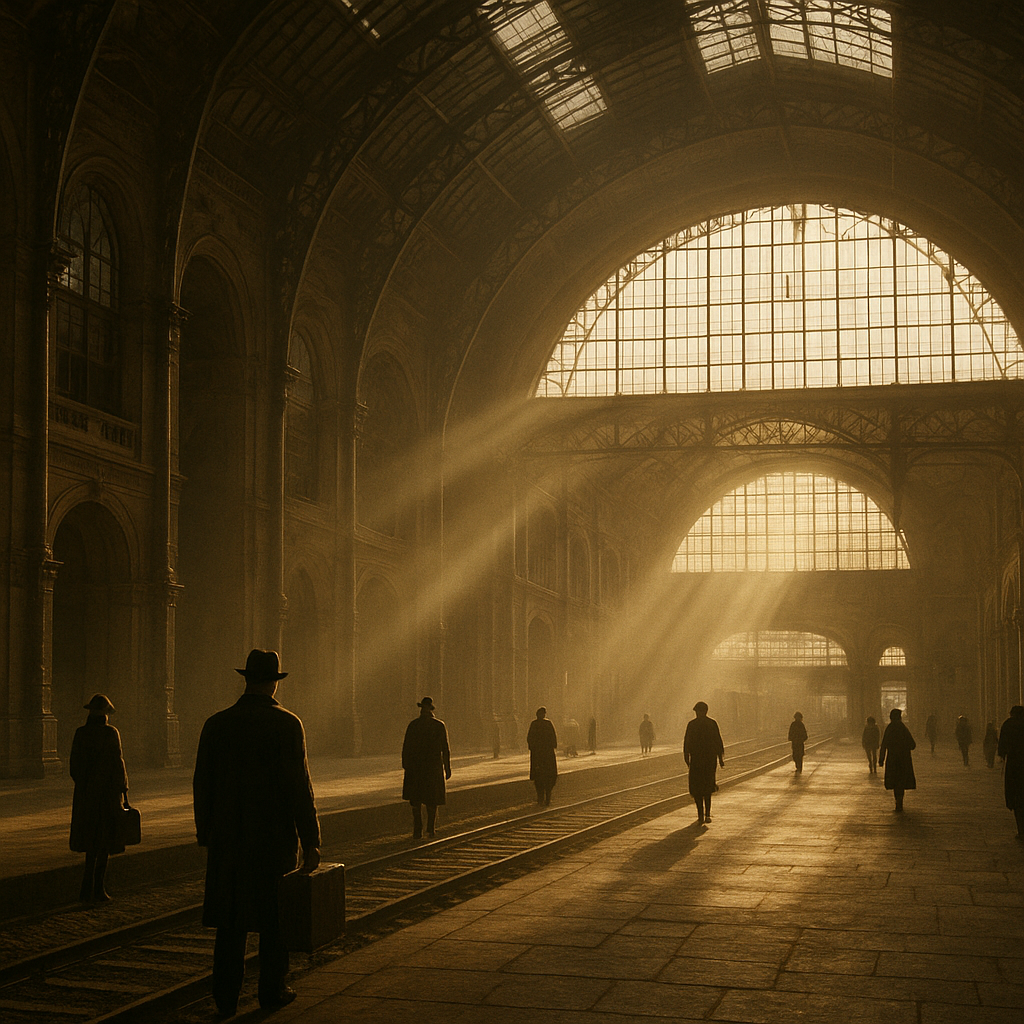
This isn’t unique to railway stations, but the specific characteristics of station lighting make it particularly pronounced. Unlike a forest, where dappled light is randomly distributed, station light tends to fall in large, defined zones. You’ll have a broad area of bright, relatively even light where the glazing overhead is intact, followed by an abrupt transition to deep shadow where ironwork or solid roofing takes over. These hard edges between light and dark are very difficult to expose for simultaneously.
Working With the Windows: Ticket Halls and Concourses
Away from the train sheds, the older parts of many historic stations — the original booking halls, waiting rooms, and concourses — present a different set of lighting challenges. These spaces were often built in stone or brick, with relatively small windows set high in the walls. The result is a much lower overall light level than the platform areas, with strong directional light coming from one or two sources and deep ambient shadows everywhere else.
This is actually closer to the lighting you might encounter in a church or cathedral, and some of the same techniques apply. The windows themselves become the subject as much as the space — the way light rakes across ornate stonework or falls on tiled floors tells the story of the building’s age and craftsmanship. Exposing for the highlights and letting the shadows fall where they fall often produces more atmospheric results than trying to lift the shadow detail artificially in post-processing.
Colour Temperature Inconsistency: A Hidden Complication
Modern photographers working in mixed lighting situations are accustomed to dealing with colour temperature differences between daylight and artificial sources. Historic railway stations add another layer of complexity: the daylight itself isn’t consistent across the space. North-facing windows produce a cool, bluish light. South-facing glazing in the roof produces warmer, more golden tones, particularly in the morning and evening. Areas near the entrance to the station, where daylight spills in horizontally, can have a completely different character to the overhead light further down the platform.
When artificial lighting — whether historic incandescent fittings or modern LEDs installed during renovation — is mixed into this equation, the colour temperature variation can become very challenging to manage in post-processing. Shooting in RAW format gives the most flexibility, but even then, any single white balance setting will be a compromise across a scene with multiple light sources of different temperatures.
Understanding Railway Signals and Their Visual Language
For those photographing working heritage railways rather than purely architectural stations, there are four main types of signals in the railway context: semaphore signals (the classic mechanical arm signals), colour light signals (which use red, amber, and green lights), position light signals, and route indicators. Each has a distinctive visual character that can add authentic detail and interest to railway photography. The semaphore signals in particular — with their mechanical movements and the way they catch and reflect light — are compelling photographic subjects in their own right, especially in the golden hour light that often illuminates preserved railway stations most beautifully.

Seasonal and Time-of-Day Variations
The quality of natural light in a historic station changes dramatically across the year in ways that are worth planning for carefully. In winter, the low angle of the sun means that light can penetrate much further into covered spaces than it does in summer, sometimes reaching areas of the platform that receive no direct light at all during the warmer months. The lower colour temperature of winter light also tends to produce a colder, more melancholic quality that suits the Victorian aesthetic of many historic stations particularly well.
Summer mornings, by contrast, can produce extraordinary shafts of hard light through east-facing glazing panels during the first couple of hours after sunrise. The combination of strong directional light, the scale of the space, and the presence of steam or dust particles in the air (particularly at active heritage railways where locomotives are in use) can create conditions that are genuinely spectacular but also very brief. Understanding the station’s orientation relative to sunrise and sunset is essential preparation, and optimising your composition for these settings is just as important as arriving at the right time.
The Practical Matter of Train Movements and Safety
A brief note on something photographers sometimes wonder about when spending time on heritage railway platforms: trains at preserved railways do sound their horns as warning signals, and three short blasts is one of several recognised signals that can mean a request for the guard’s attention or a warning to clear the tracks — the exact meaning varies by operator and context. Similarly, the tradition of placing a penny on a railroad track (more common as a curiosity in the United States than in Britain) is actually inadvisable and potentially dangerous, as it can constitute interference with railway infrastructure. These aren’t directly relevant to photography technique, but understanding the environment and its conventions makes for a safer and more respectful visit.
Practical Techniques for Managing Difficult Station Light
- Arrive before the station opens to the public if possible — many heritage railways offer early access for photographers, and the light without crowds of visitors is far easier to work with.
- Use a sturdy tripod in the darker areas of ticket halls and waiting rooms, where handholding at the shutter speeds required for sharpness isn’t realistic.
- Bracket your exposures in high-contrast platform scenes — capturing multiple exposures for potential HDR blending gives far more options in post-processing than relying on a single frame.
- Position subjects in transitional zones between direct light and shadow rather than in the harshest direct sunlight — these transitional areas often have a beautiful, wrap-around quality of light that the most intensely lit zones lack.
- Return multiple times at different times of day and in different seasons — the same station can feel like an entirely different photographic location depending on the light angle and quality.
- Pay attention to wet platforms and reflective surfaces — after rain, the reflections of the glazed roof structure in puddles and polished stone floors can create compelling compositional opportunities.
Conclusion
Historic railway stations occupy a genuinely unique position in the landscape of natural light photography. The combination of vast glazed roofs, heavy Victorian ironwork, stone interiors, and the sheer scale of these spaces creates lighting conditions that are simultaneously breathtaking and technically demanding. The challenges — extreme dynamic range, inconsistent colour temperature, hard-edged shadows, and rapidly changing conditions — are all rooted in the original engineering decisions made by the architects and builders who designed these spaces for practical purposes that had nothing to do with photography.
Understanding that history makes the photography more meaningful and the technical decisions more intuitive. Knowing that the diffused quality of light in a particular station comes partly from decades of grime on the glazing, or that the colour cast near the entrance differs from the overhead light because of the different angles of sky it’s drawing from, transforms the experience from one of reactive problem-solving to something more like a genuine collaboration with the architecture. These buildings shaped and channelled light long before cameras arrived to record it — the photographer’s job is simply to recognise what the building is already doing and find a way to make it visible.