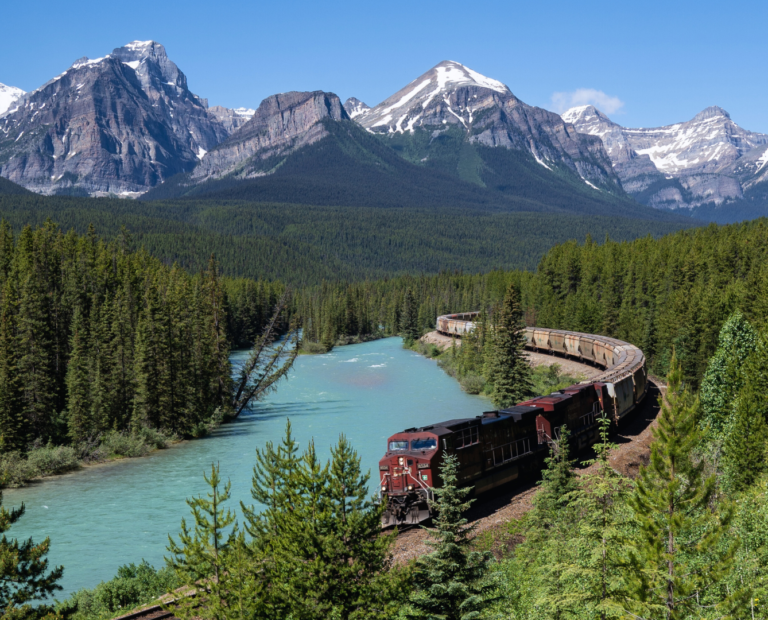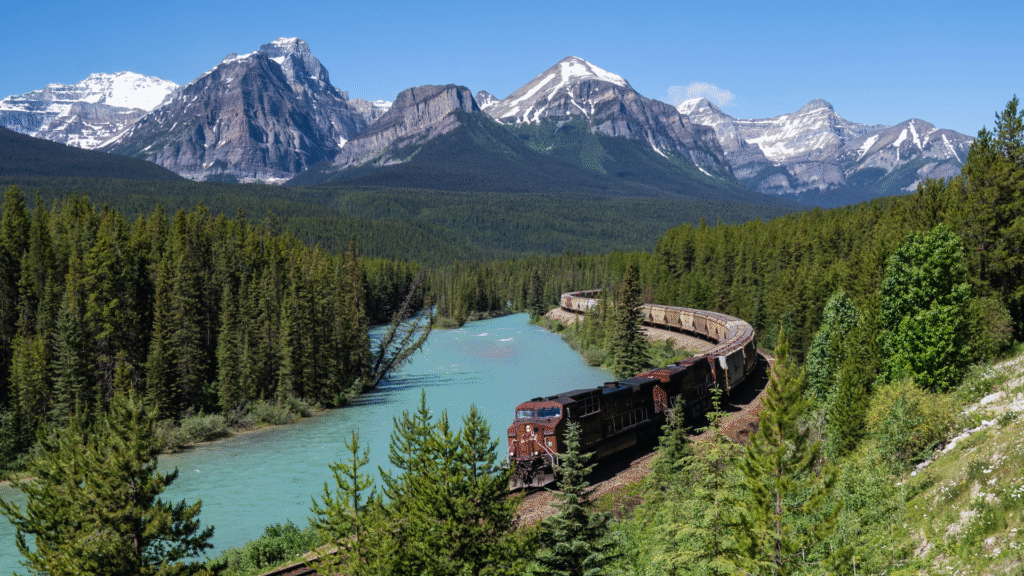
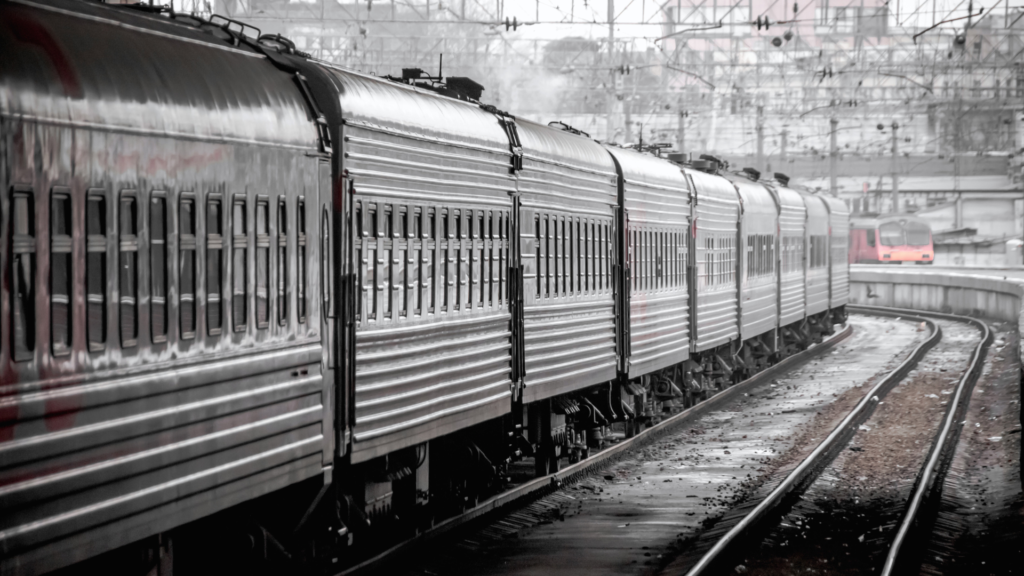
Black-and-white train photography captures the raw emotion and stark beauty of railway landscapes. By stripping away colour, this style allows photographers to focus on contrasts, textures, and the interplay of light and shadow. To excel in black-and-white train photography, it is essential to pay attention to composition and lighting, as these elements enhance the dramatic effect.
Understanding the fundamentals of monochrome imagery can elevate train photography from ordinary to extraordinary. Choosing the right moments, such as early morning or late afternoon, can create compelling images that convey mood and narrative. Utilising strong leading lines and interesting angles will guide the viewer’s eye and create a sense of movement in the photograph.
Embracing post-processing techniques also plays a significant role in achieving stunning results. Converting colour images to black and white can enhance contrast and highlight various details often overlooked in colour photographs. Learning to use editing software effectively will allow photographers to achieve their desired aesthetic and amplify the emotional impact of their train images.
Understanding Black-and-White Train Photography
Black-and-white photography offers a distinct aesthetic that enhances the beauty of railway scenes. This style emphasises form, texture, and contrast, compelling viewers to notice details often overlooked in colour photography. Mastering essential techniques and camera settings is critical for achieving impressive monochrome images.
The Charm of Monochrome in Railways
Monochrome photography captures the timeless quality of railways, focusing on light and shadow. It highlights textures in the train’s surface, the surrounding environment, and the intricate patterns of tracks. This style strips away colour distractions, allowing viewers to engage more deeply with the structural elements.
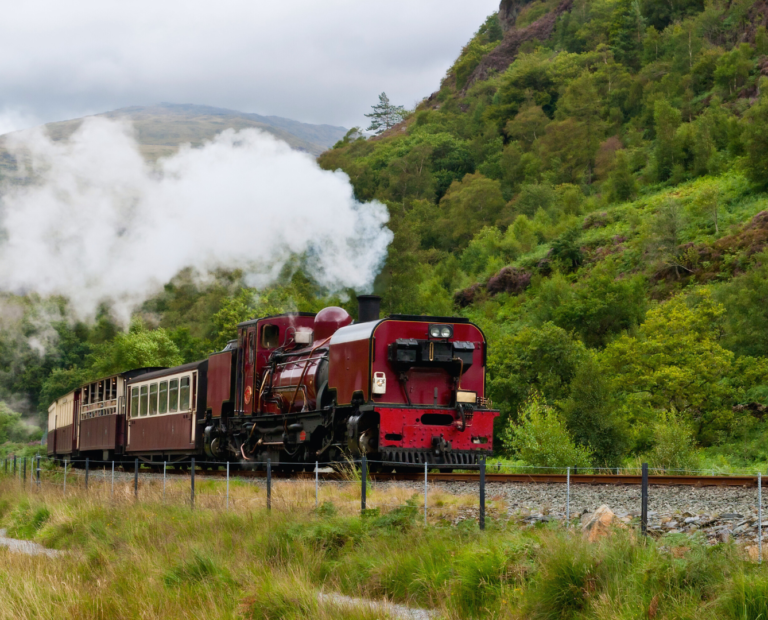
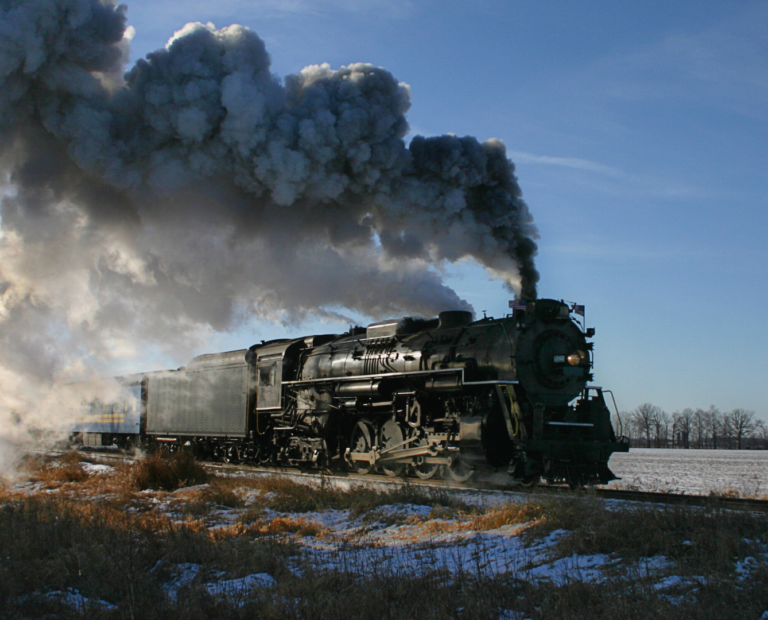
In black-and-white, tonal contrast becomes crucial. It emphasises the dynamic range between deep blacks and bright whites, creating striking visuals. For instance, a steam engine billowing clouds of smoke against a bright sky can produce dramatic imagery that captures the viewer’s imagination. The absence of colour often conveys mood and emotion that complements the railway’s historical significance.
Essential Camera Settings for B&W Photography
When shooting in black and white, camera settings require careful consideration. The ISO setting determines the sensor’s sensitivity to light. For optimal results, a lower ISO (100-400) is recommended to minimise noise and maintain clarity.
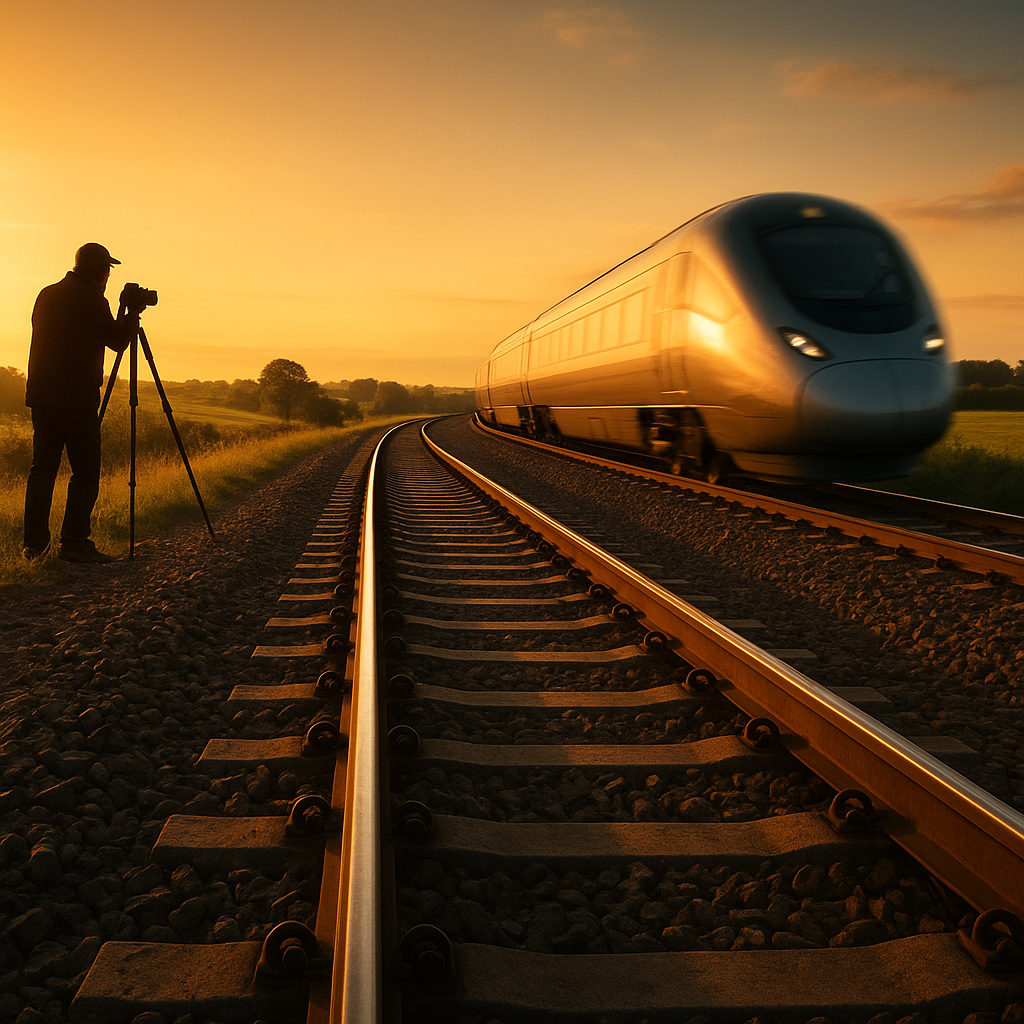
The aperture impacts the depth of field and sharpness. A wide aperture (f/2.8 to f/5.6) can create a shallow focus effect, isolating the train against a blurred background. Shutter speed also plays a vital role, especially in capturing fast-moving trains. A speed of 1/500s or quicker is often adequate for freezing motion.
When capturing scenes, it is beneficial to consider shooting in colour and converting to black and white during post-processing. This allows for enhanced control over tonal adjustments. Subsequently, they can manipulate elements like brightness and contrast to achieve the desired monochrome effect.
Composition and Framing Techniques
Effective composition and thoughtful framing serve as the backbone of striking black-and-white train photography. By leveraging elements like shadows and textures, photographers can elevate their images while employing techniques like the rule of thirds to create visually engaging compositions.
Harnessing the Power of Shadows and Textures
Shadows play a pivotal role in black-and-white photography, providing depth and contrast. They can define the shapes and outlines of trains, enhancing their visual impact. Photographers should seek out harsh sunlight or dramatic lighting conditions to create strong shadows that add interest to their compositions.
Textures should be emphasised to enhance the feeling of depth and tactile quality within the image. Close-up shots of train components—such as wheels, tracks, or metal surfaces—invite viewers to appreciate intricate details. Adjusting the angle can help capture different textures, from smooth metal to weathered wood, making the image more compelling.
Applying the Rule of Thirds in Train Photography
The rule of thirds is a fundamental composition technique that aids in creating balanced images. By dividing the frame into a grid of nine equal sections, essential elements can be positioned along these lines or their intersections. For train photography, placing the train along either vertical line can create a sense of movement.
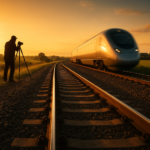
Foreground elements can also be integrated into the composition to provide context. For example, including tracks that lead toward the train adds depth and directs the viewer’s attention. Training the eye to recognise these compositional elements enhances one’s ability to capture dynamic and engaging images in black and white.
Equipment and Software for B&W Train Photography
Selecting the right tools is crucial for achieving striking black-and-white train photography. The choice of camera equipment and post-processing software can significantly influence the final outcome. Here are key factors to consider.
Choosing the Right Camera Equipment
For black-and-white train photography, a good camera needs to capture sharp details and rich contrasts. Canon, Nikon, and Sony offer excellent options. A full-frame DSLR or mirrorless camera is preferred for its superior low-light performance and dynamic range.
Zoom lenses are versatile for capturing trains in various settings. A lens with a focal length of around 24-70mm is ideal for both close-ups and wider views. Additionally, using filters like polarising filters can help reduce glare and enhance cloud textures, which add depth to the monochrome images.
It is also important to pay attention to the camera’s settings. Shooting in RAW format preserves details, giving more flexibility in post-processing. Adjusting settings like ISO and shutter speed will help to create the desired mood.
Post-Processing Software for Enhanced Contrasts
Post-processing plays a pivotal role in black-and-white photography. Software such as Adobe Lightroom and Photoshop are powerful tools for enhancing contrasts and refining images.
In Lightroom, photographers can adjust exposure, contrast, and clarity to highlight textures in train images. The Black and White panel allows for precise control over luminance values, making it easier to bring out details in shadows and highlights.
Photoshop offers advanced features like layers and masks for selective editing. Converting colour images to black and white can be done using various techniques, including using adjustment layers.
Both software options support plugins to further enhance images. Photographers should also consider using presets to streamline their workflow while achieving consistent results.
Capturing Emotion and Story in Train Photography
Effective train photography captures the emotion and stories behind each railway experience. By focusing on heritage railways and employing black-and-white techniques, photographers can create evocative images that resonate on a deeper level.
Portraying the Soul of Heritage Railways
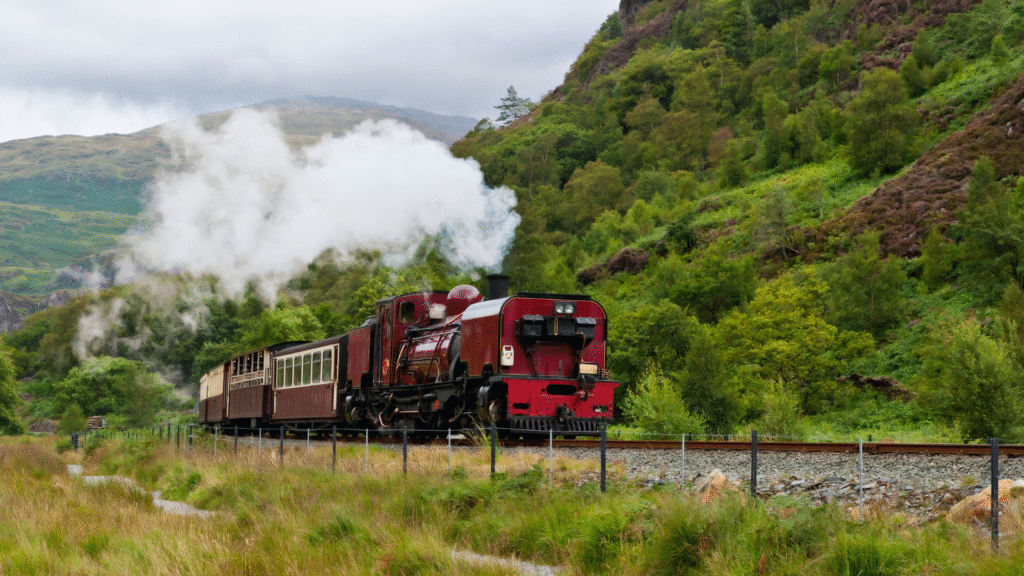
Heritage railways offer a rich canvas for emotional storytelling. The aesthetic of vintage trains, paired with their historical significance, allows photographers to convey nostalgia.
Utilising contrast and tones is essential in black-and-white photography. Deep shadows can evoke feelings of mystery, while softer highlights create a sense of warmth.
Photographers should seek to include elements that reflect the human experience, such as passengers interacting with railway staff or the landscape enveloping the train. These details add depth, transforming a simple image into a narrative.
Narratives in Black-and-White Portrait and Landscape
In both portrait and landscape photography, emotion plays a critical role. Black-and-white portraits of train workers or passengers can depict vulnerability and connection.
Capturing candid moments, akin to street photography, enhances the storytelling aspect. Photographers should look for spontaneous interactions that reveal the personality of individuals and their relationship with the railway.
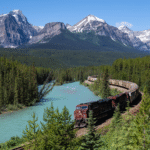
Landscapes around heritage railways serve as powerful backdrops. The absence of colour directs focus to composition and shapes, allowing the viewer to contemplate the journey.
Incorporating leading lines from tracks can guide the viewer’s eye, creating a visual narrative that draws them into the photograph. This method emphasises the journey rather than just the destination.