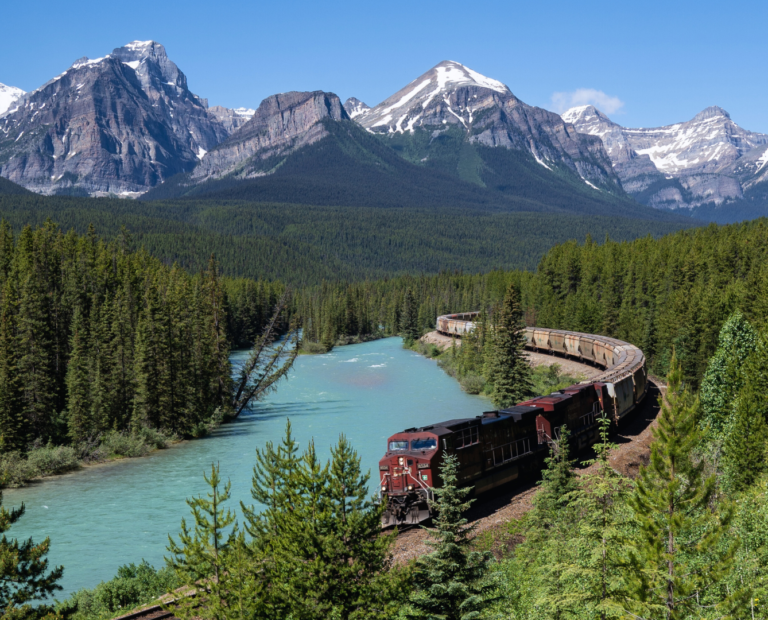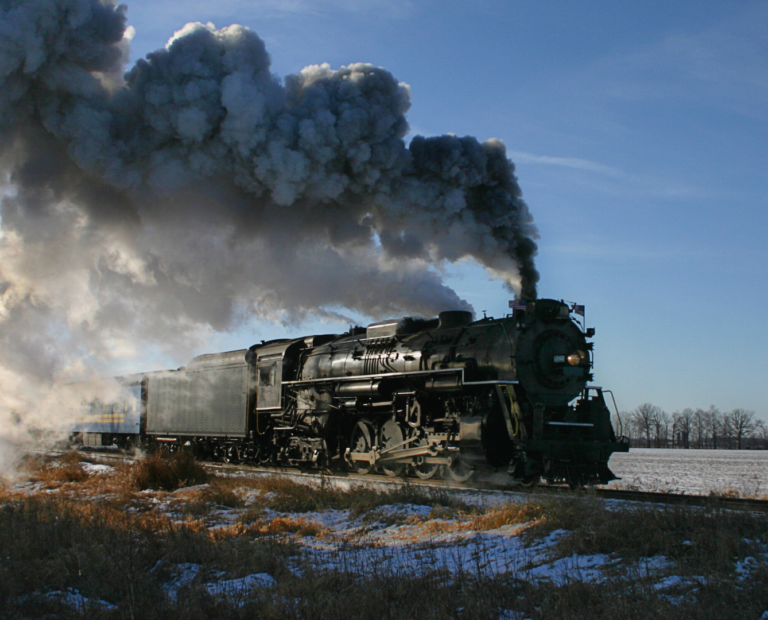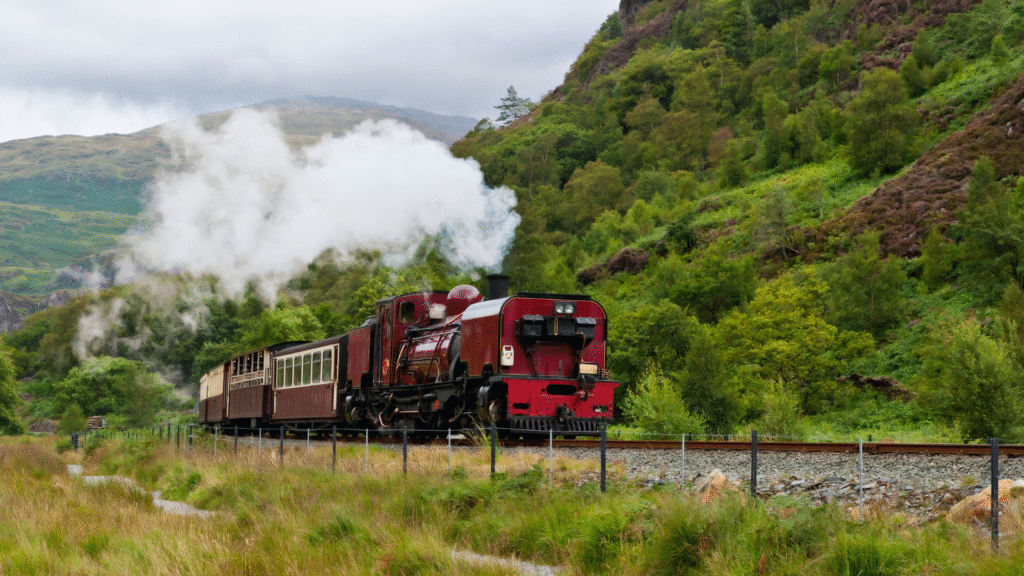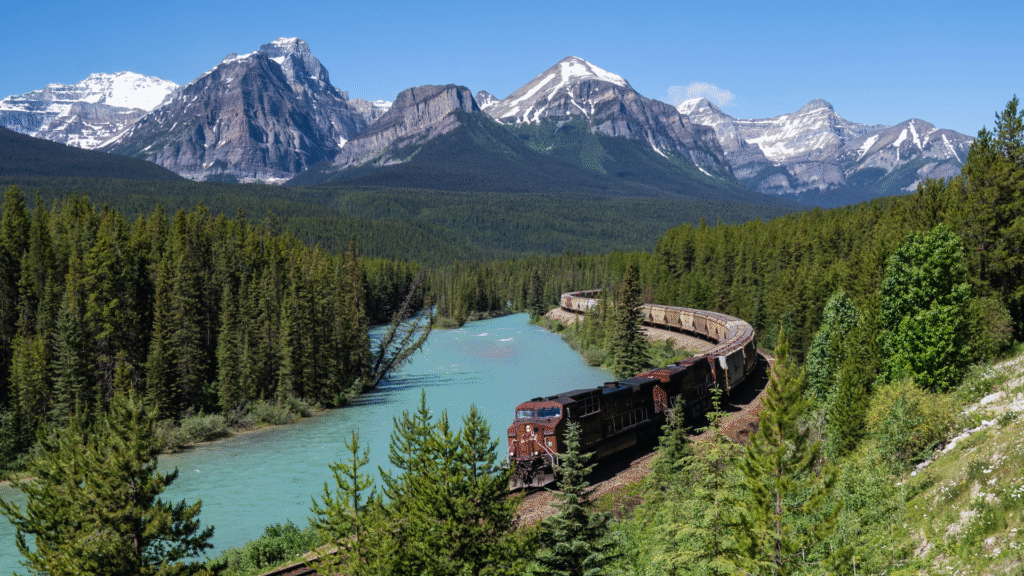
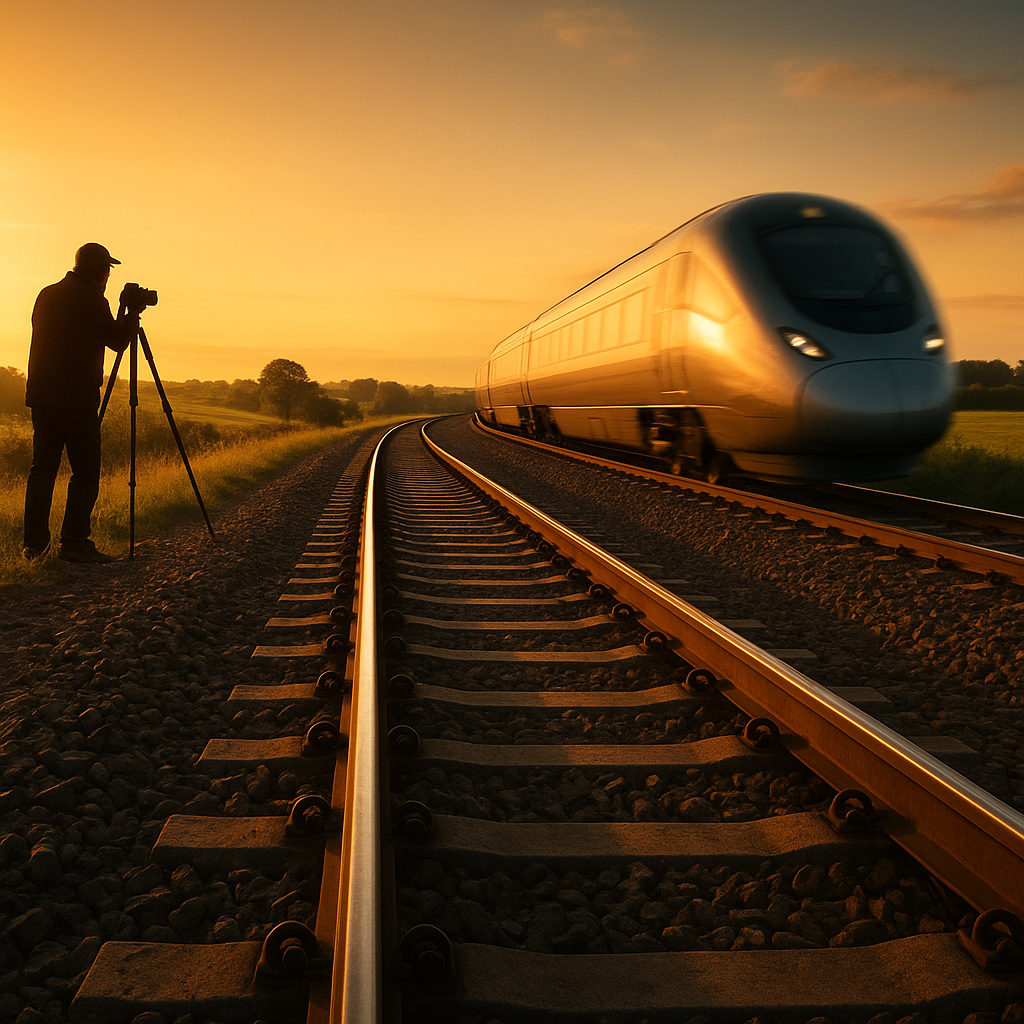
Railway photography sits at a fascinating crossroads between technical precision and artistic vision. Whether you’re chasing steam locomotives through the Pennines or capturing a modern intercity train slicing through a golden wheat field, the difference between a snapshot and a genuinely compelling image often comes down to composition. And yet, composition alone isn’t enough — the camera settings you choose directly affect how your compositional decisions translate onto the sensor. Getting both working together is where the magic happens.
This guide explores how to approach composition thoughtfully within the context of railway photography, and how your settings choices should serve — not undermine — that creative intent.
Understanding the Relationship Between Composition and Camera Settings
It’s tempting to treat composition and camera settings as entirely separate concerns. Many photographers nail one and neglect the other. But in railway photography specifically, they’re deeply intertwined. A beautifully composed leading line shot of a track curving into the distance can be ruined by motion blur at the wrong moment. Equally, technically perfect shutter speed selection won’t rescue an image where the train sits dead-centre with no context, no foreground interest, and no story.
Think of composition as the intention and settings as the execution. Both need to speak the same language.
Core Composition Principles That Work Especially Well for Railway Photography
The Rule of Thirds and Why Trains Break It Beautifully
The rule of thirds is one of the most cited composition guidelines in photography — and for good reason. Placing your subject off-centre creates tension, movement, and visual interest. For railway photography, positioning a locomotive on the left or right third of the frame, with open space ahead of it, implies motion and journey. It gives the train somewhere to go within the image.
However, railway photography also offers genuinely compelling reasons to break this rule. A train emerging dead-centre from a tunnel mouth, symmetrically framed, can be extraordinarily powerful. The context matters more than the rule.
Leading Lines — the Railway Photographer’s Greatest Tool
Few subjects lend themselves to leading lines as naturally as railways. The tracks themselves are among the most dynamic leading line elements in all of landscape and transport photography. They draw the eye deep into the frame, create a sense of perspective and scale, and — when used well — add enormous depth to an otherwise flat composition.
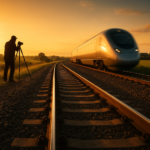
For maximum impact with leading lines, consider shooting from a low angle. Getting your camera down to near rail level (safely and legally, of course) dramatically exaggerates perspective, making the converging tracks recede powerfully into the background. Pair this with a wide-angle lens and a small aperture (f/8 to f/16) to ensure both the foreground track detail and the distant locomotive remain sharp.
Foreground Interest and Environmental Context
One of the most effective ways to elevate a railway photograph is to include meaningful foreground interest. Wildflowers beside the track, a drystone wall, a signal box, frost on the grass — these elements anchor the image in a specific time and place. They transform a photograph of a train into a photograph about a train’s journey through the world.
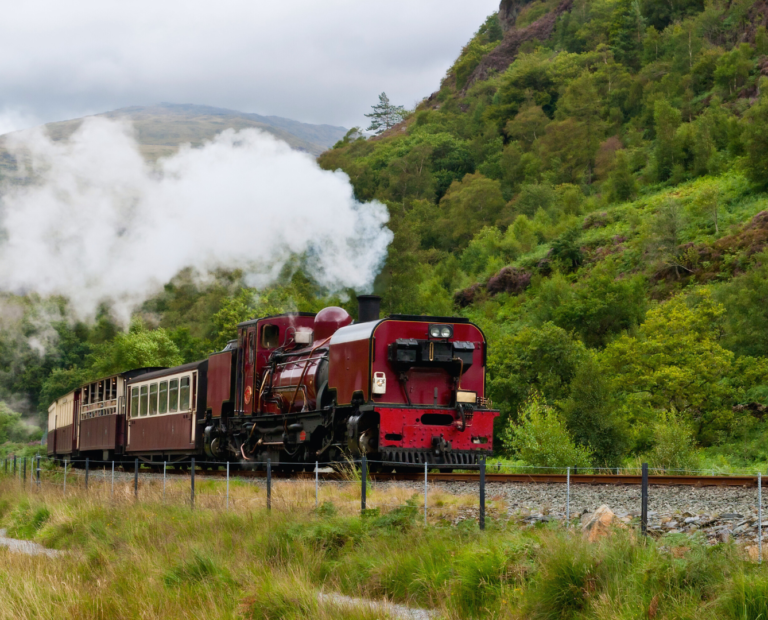
This approach works particularly well at heritage railways, where the surrounding landscape and infrastructure are often as historically interesting as the locomotive itself. The history and innovation behind steam trains adds another layer of meaning to these images, connecting the photographer to a much broader story. When including foreground elements, adjust your focus point deliberately — auto-focus will often grab the most prominent object, which may not be where you want sharpness to fall. In manual or single-point AF mode, take control.

What Are the Best Settings for Photographing Trains?
This is one of the most commonly asked questions among photographers approaching railway subjects for the first time — and the honest answer is that it depends on what you’re trying to achieve compositionally. That said, there are some reliable starting points.
For a moving train where you want frozen, sharp motion:
- Shutter speed: 1/500s or faster — for high-speed trains, 1/1000s to 1/2000s is often necessary
- Aperture: f/5.6 to f/8 for a balance of sharpness and depth of field
- ISO: As low as conditions allow — ISO 400 to 800 is a reasonable compromise in overcast British light
- Autofocus mode: Continuous AF (AI Servo on Canon, AF-C on Nikon/Sony) to track the approaching subject
For a panned shot that conveys speed through motion blur in the background:
- Shutter speed: 1/60s to 1/125s, depending on train speed
- Aperture: f/8 to f/11 — you’ll likely need a neutral density filter in bright conditions
- Technique: Follow the train’s movement smoothly through the viewfinder, releasing the shutter mid-pan
For static or slow-moving heritage trains where atmosphere and detail matter:
- Shutter speed: 1/250s is generally sufficient
- Aperture: Consider f/4 to f/5.6 for a shallower depth of field that isolates the locomotive from a busy background
The 7 Rules of Composition in Photography — Applied to Railways
There’s a reason composition rules come up repeatedly in photography education — they’re distilled from centuries of visual art. The seven most cited rules are: rule of thirds, leading lines, framing, symmetry and patterns, depth, simplicity, and the golden ratio. For railway photographers, each translates practically:
- Rule of thirds: Position the locomotive at an intersection point, with space ahead of it
- Leading lines: Use the tracks to guide the viewer’s eye
- Framing: Use tunnel entrances, bridges, or overhanging trees to frame the train naturally
- Symmetry and patterns: Viaducts, station platforms, and signal gantries offer strong geometric repetition
- Depth: Layer foreground, midground subject, and background
- Simplicity: Sometimes a lone locomotive against open sky is the strongest statement
- Golden ratio: A more organic spiral composition — harder to apply on location, but worth studying
Managing Backgrounds and Sky in Railway Composition
One of the persistent challenges in railway photography — and a frequently searched topic — is handling a blown-out or distracting sky. Bright overcast days in the UK often produce flat, featureless white skies that can dominate a frame and wash out the mood of an image.
There are several compositional and technical strategies to address this:
- Reduce sky in the frame: Shoot lower, include more foreground, and let the landscape do the work
- Use graduated ND filters: A 2-stop or 3-stop graduated neutral density filter darkens the sky relative to the ground, balancing exposure without post-processing
- Expose for the sky, recover shadows: Shooting in RAW format gives considerable latitude to bring detail back into shadowed areas without blowing highlights further
- Embrace cloud texture: A sky with genuine cloud movement can add drama — use a polarising filter to deepen blue tones and increase cloud contrast
Metering mode matters here too. Evaluative or matrix metering will average the whole scene, which often results in underexposure of the train when a bright sky occupies significant frame area. Switching to spot or centre-weighted metering — and metering from the locomotive itself — gives you more predictable results.
Improving Your Compositional Eye Over Time
Composition isn’t a formula to be applied mechanically — it’s a visual instinct that develops through deliberate practice. One of the most effective methods is studying photographs you find compelling and working backwards: where is the subject placed? What draws your eye into the frame? What’s been excluded, and why does that exclusion strengthen the image?
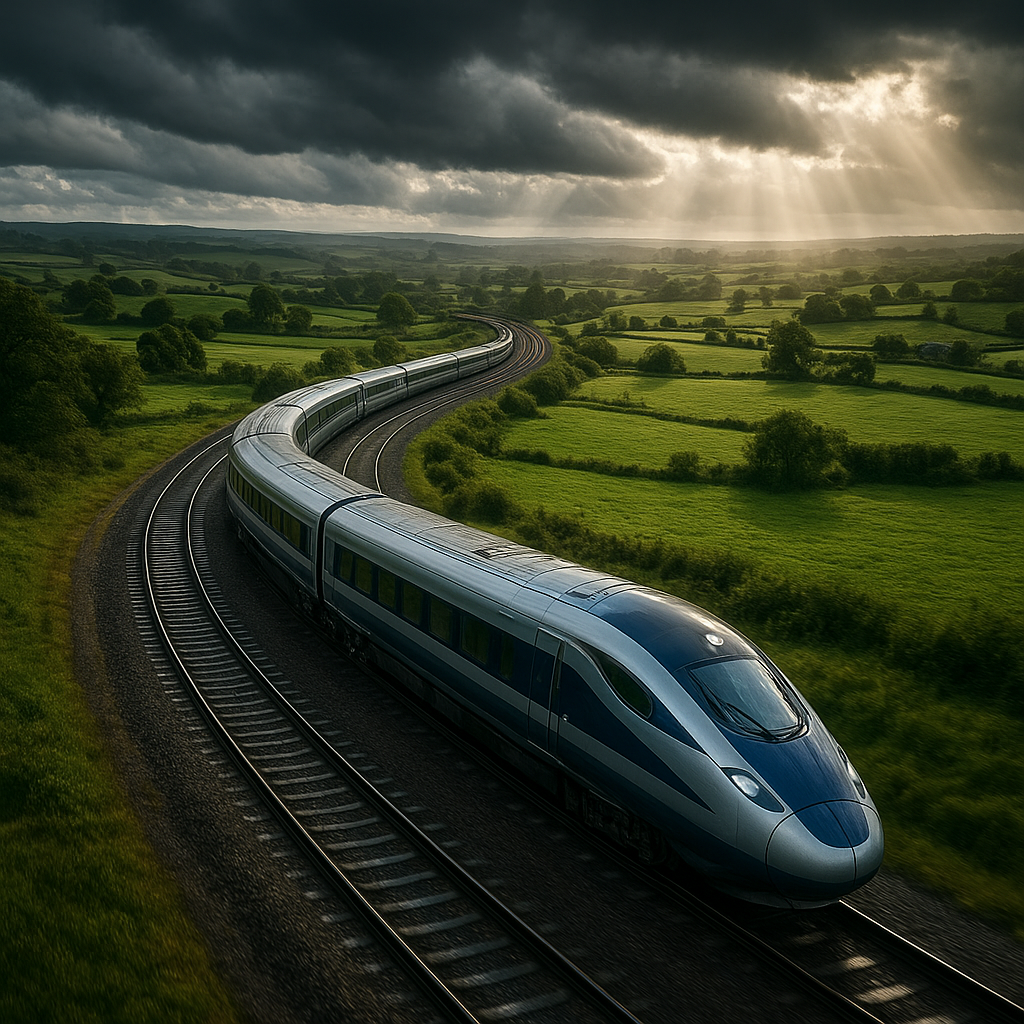
Before pressing the shutter, it’s worth pausing to ask a few questions:
- What is this photograph actually about?
- Is there anything in the frame that doesn’t serve that story?
- Have I moved to find the best angle, or just raised the camera from where I happen to be standing?
- Does my chosen depth of field support or work against the composition?
The act of walking the location before a train arrives is undervalued. Scouting your position, identifying potential foreground elements, checking where the light falls at different times, and testing a few compositions before the subject appears dramatically increases the consistency of strong results.
Working with Light Direction and Time of Day
The golden hours — the first hour after sunrise and the last before sunset — are beloved in landscape photography, and they work magnificently for railways too. Low-angle light rakes across the side of a locomotive, revealing texture in the bodywork and casting long, dramatic shadows from the wheels and running gear.
For three-quarter lighting (where the light source is roughly 45 degrees to the side and front of the subject), position yourself so the light illuminates the front and one side of the train simultaneously. This is widely considered the most flattering and informative angle for showing a locomotive’s form and character. Understanding the engineering principles behind British railways can also deepen your appreciation of what you’re photographing, informing more thoughtful compositional choices.
Harsh midday sun creates deep shadows and high contrast that can be difficult to manage — though it can work beautifully in black and white conversions, where strong shadow detail and dramatic texture tell their own story.
Bringing It All Together
Strong railway photography is the product of intentional decisions made before, during, and after the shutter is pressed. Composition gives your image structure and meaning. Settings give your composition technical integrity. Neither works in isolation.
The most consistently rewarding approach is to start with a clear compositional intention — what story does this image tell? — and then work backwards to the settings that serve that vision. Whether that means freezing a BR Class 66 at 1/1000s with tight framing, or blurring a heritage steam train across a viaduct at 1/60s with a sweeping panoramic composition, the logic remains the same: technique in service of vision.
Developing this way of thinking takes time, but it’s the single most transferable skill in photography. The railway provides endlessly varied subjects, light conditions, and locations — making it one of the richest subjects for photographers who want to keep growing.